WarrantyOS
I found a business where the sales picture, dealer activity, fund exposure, and claims workload all lived in different places. WarrantyOS brings them into one live operating system.

The problem was not technology. The problem was visibility.
Running the warranty business exposed the gap quickly. Sales knew the deal. Dealers knew what they had sold. Claims handlers knew the risk. Finance knew the money. Leadership had to piece it all together afterwards. Forecasts, product terms, dealer performance, fund balances, invoices, commissions, customer claims, phone calls, emails, and support notes were all connected in real life, but not in the software.

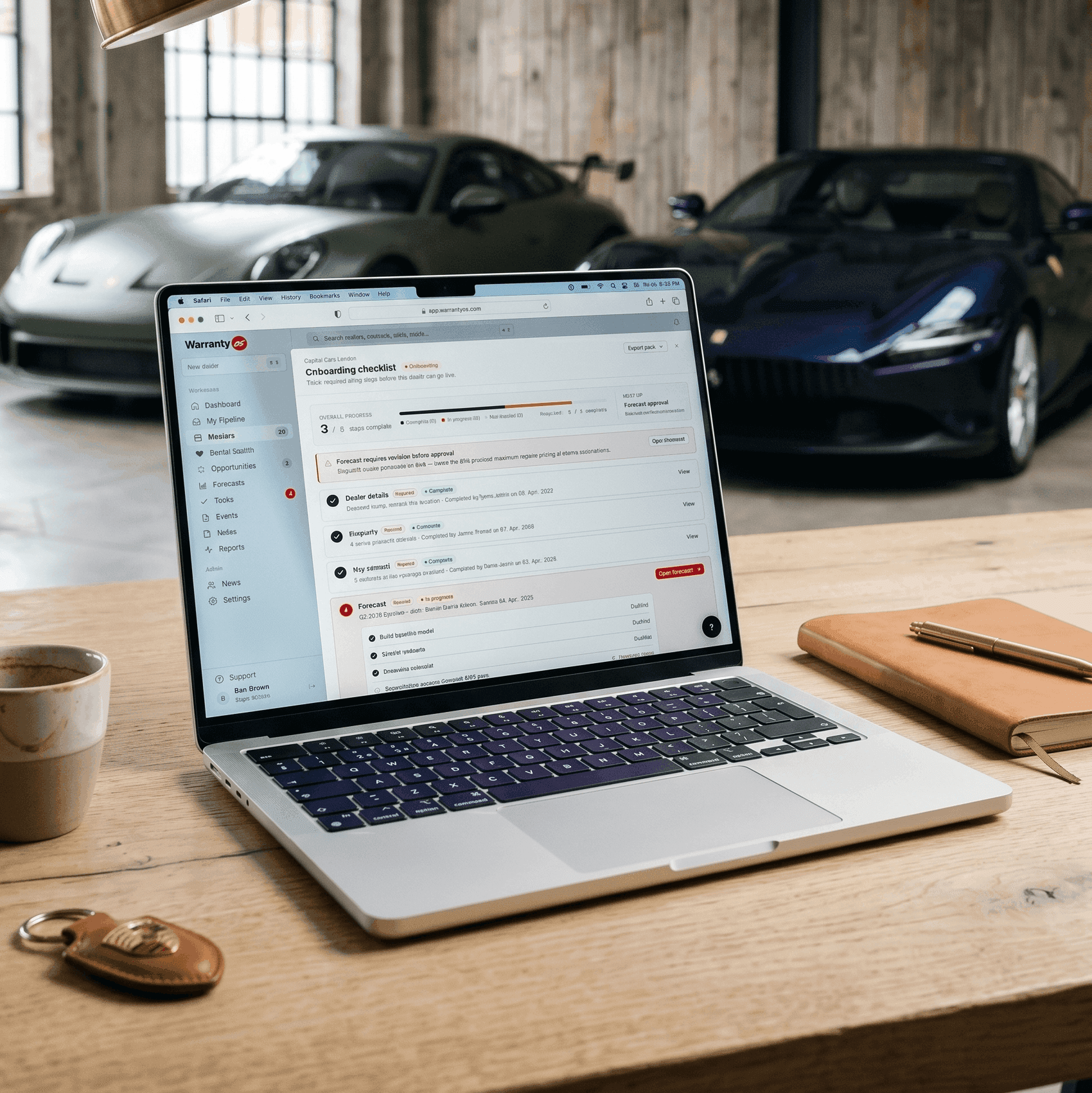
So I built three products that behave like one system.
WarrantyOS is a staff CRM, a dealer portal, and a claims support app working together. The CRM runs the commercial lifecycle: prospects, products, pricing, forecasts, contracts, invoices, commissions, dealer health, and performance. The dealer portal gives dealers the self-service layer for warranty sales and claims. The support app turns email, Aircall, public form, and manual claim intake into structured workflows, AI-assisted assessments, decisions, communications, and audit trails.
Product estate
- WarrantyOS CRM
- Dealer Portal
- Claims Scanner
CRM backbone
- Dealer lifecycle
- Product templates
- Forecast pacing
- Invoices
- Commission snapshots
Dealer layer
- Warranty registration
- Claim submission
- Product availability
- Fund visibility
- Reporting
Claims layer
- Email intake
- Aircall intake
- Public form
- Manual entry
- AI assessment
Sync model
- Internal APIs
- PortalOutbox events
- Shared product keys
- Dealer-linked claims
- Audit history
The same dealer could appear in sales, support, finance, and claims without one clear operating record. That made simple questions expensive: what did we sell, what is at risk, what is owed, what changed, and who acted last?
The CRM became the place where the business is configured: dealer records, contacts, opportunities, product templates, per-dealer pricing, forecasts, signed plans, invoice flows, commissions, reports, and dealer health.
The portal keeps dealer-facing work out of inboxes. Dealers can use the operating layer without seeing internal commercial controls, while the business still keeps the data connected.
The support app captures claims from four channels, links them to dealers, structures evidence, runs decision support, drafts communications, records activity, and keeps handlers focused on the next action.
The important part is the sync. CRM terms inform portal behaviour. Portal activity informs commercial reporting. Claims activity links back to dealer performance. Everyone works from the same truth instead of rebuilding it.
WarrantyOS gives the business one transparent operating picture.
Sales can see whether a dealer is moving from promise to performance. Account managers can see pacing and risk before month end. Finance can issue invoices and track commissions against the same source data. Claims handlers can see the dealer context before making a decision. Leadership can understand activity, exposure, and performance without chasing five versions of the truth.
The revolutionary part is not the stack. It is the deliverable. WarrantyOS takes a messy, multi-sided warranty operation and gives each team the screen they need while keeping the business logic underneath connected. That means fewer blind spots, cleaner handovers, stronger auditability, and faster decisions across the whole company.
Commercial breakdown
- Model
- B2B2C warranty operating system
- Status
- Live
- Revenue
- Dealer network + warranty operations
- Ownership
- Founder · product lead
One business. Three specialist products. One live version of the truth.
WarrantyOS · Operating thesis